10 Things You Need to Know About Becoming a Polar Explorer
From gaining 10kg to crevasse rescues and surviving minus 40°C, Erica Stanford shares ten lessons from training to cross Antarctica.
From gaining 10kg to learning how to escape a crevasse, Erica Stanford is preparing for a 2,000km Antarctic crossing that could take four months.
Erica Stanford is learning to pull a heavy sled, climb out of a crevasse and cook inside a tent surrounded by snow. She has also gained 10kg as part of the preparations for a journey across Antarctica.
Stanford, who works in the emerging technology team at law firm CMS, is planning a 2,000km crossing with experienced polar explorer Ben Weber. Their Polar Dogs expedition is scheduled for November 2027, beginning on Berkner Island, passing through the South Pole and finishing at the Ross Ice Shelf on the far side of the continent.
She describes herself as a polar explorer in training. Here are ten things the experience has taught her so far.
1. You do not have to look like your idea of an explorer
For years, Stanford assumed polar exploration belonged to other people. The explorers she saw were often large, strong men with military backgrounds, and she could not imagine herself among them.
“I just always thought they’re like these superhuman people,” Stanford says.
Meeting Ben changed that. He had reached the South Pole alone, but had first needed to learn how to ski himself. After spending an evening asking about his training, Stanford realised that preparation could be broken down into individual steps: skiing, survival skills, medical training and physical conditioning. What once felt like a distant ambition became something she could begin organising.
2. You can learn to ski, even if you dislike skiing
Stanford skied occasionally as a child, but found the idea of downhill skiing at speed frightening. What attracted her to Antarctica was the landscape and remoteness, rather than skiing itself.
“I had no desire to ski, but I’ve always been obsessed with sort of remote places like deserts. I just love the peace and the barrenness,” she says.
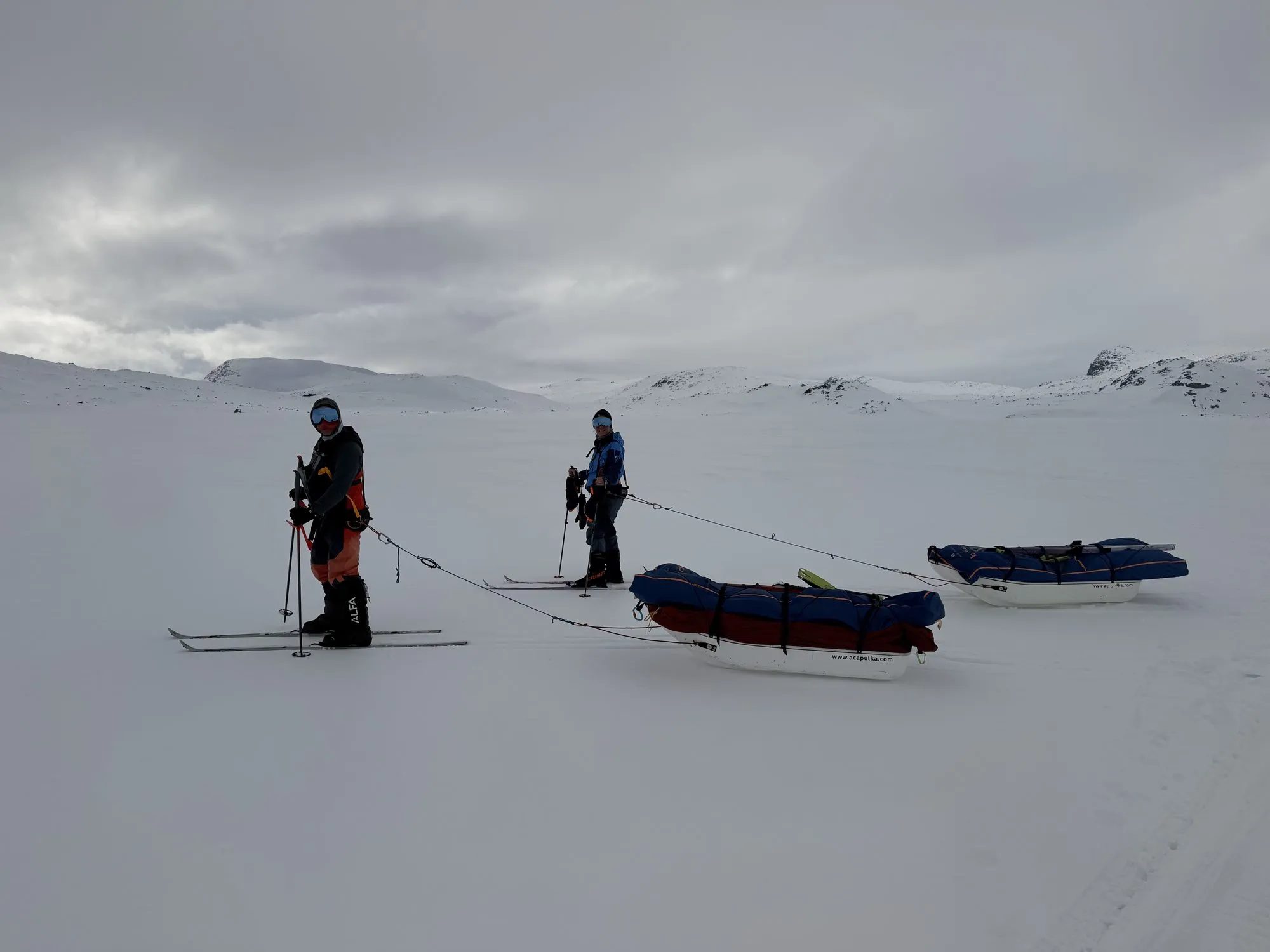
Learning that polar travel involves slower, sustained progress while pulling a sled made the prospect more manageable. Her preparation has included backcountry skiing in Finnish Lapland in temperatures of minus 40°C, polar expedition and survival training in Norway, and further ski lessons in Oslo. She has also completed an eight-day training expedition. She is still refining her technique, particularly when descending with a sled that could pull her off balance.
3. Gaining weight can be part of the preparation
Stanford began her preparations around 40kg lighter than Ben. Now she is building the strength needed to haul a sled expected to weigh roughly 20kg more than she does. She has gained 10kg through a combination of muscle and additional body weight.
“I’ve got to get a lot stronger,” she says.
During training expeditions, she has lost between one and two kilos a week. Based on conversations with people who have reached the South Pole, she anticipates that prolonged exertion and the cold could lead to substantial weight loss over the full crossing. She estimates a daily energy deficit of around 2,000 calories while skiing for up to 12 hours.
That makes building energy reserves, as well as maintaining strength, an important part of her preparations. Exact weight loss over the expedition will depend on conditions, duration and nutrition.
4. “If you sweat, you die”
This is the phrase Stanford remembers most clearly from polar survival training. It is a stark warning about the dangers of getting clothing damp with sweat in extreme cold.
“You get told that like a mantra that you just can’t allow yourself to sweat because the sweat freezes,” she says.
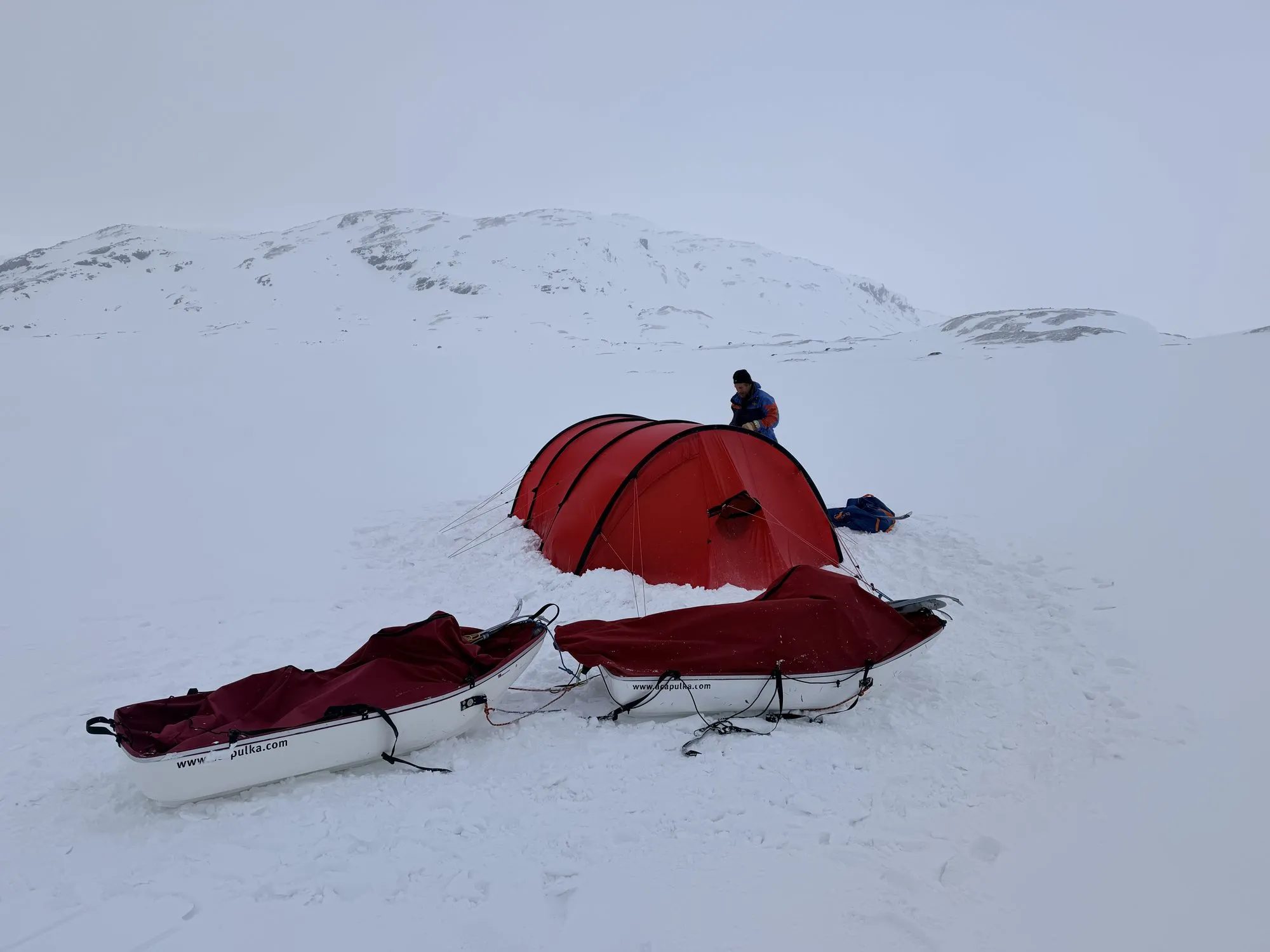
Training involves learning how to layer clothing, regulate effort and avoid overheating while hauling a heavy sled. Fitness is only part of the challenge; she also needs to judge her pace carefully. Her survival course covered pitching tents, cooking in snow and choosing suitable food as well as managing clothing in the cold.
5. There will be no shower
The expedition could mean up to four months without conventional washing facilities. Stanford has so far spent around eight days at a time in similar conditions, and says the lack of showers was less troubling than she expected.
“You just sleep in your base layers because you would be way too cold to change clothes,” she says.
She uses natural wool base layers and plans to carry very little spare clothing. Wet wipes are one possibility, although every used wipe would have to be carried out. Even basic daily routines become questions of weight, waste management and avoiding unnecessary exposure to the cold.
6. Practise getting out of trouble before you are in it
Stanford and Ben have completed crevasse-rescue training in Chamonix. They began by learning to ascend a rope, progressed to steeper terrain and were eventually lowered into a crevasse to climb back out.
“It is a bit scary being in a crevasse because you literally can’t see the bottom,” she says.
They intend to return for further practice, including exercises involving skis and a loaded sled, until the techniques feel familiar. Advice from their instructor has already prompted adjustments to the proposed route to limit exposure to crevasses.

7. Choose someone who stays calm
An eight-day expedition in Norway gave Stanford the chance to see how she and Ben functioned as a team. During a whiteout, visibility dropped so sharply that they could not see the ends of their skis. They were on steep terrain, unsure of what lay nearby, when the wind rapidly strengthened.
They decided to stop and pitch their tent. Stanford lay across it to keep it from blowing away while Ben worked to erect it. His composure made an impression.
Both are focused on completing the crossing rather than attempting a speed record. The training expeditions are as much about testing their partnership as their physical ability.
8. Test your meals before you go – and keep a deliciousness diary
Stanford is vegan and has been working her way through dehydrated expedition meals, recording which ones she would look forward to eating again. On one trip, she tested roughly 15 savoury meals and eight to ten breakfasts.
“My aim is to find enough varied expedition meals for breakfast and main meals that I’m looking forward to eating every day,” she says.
Some meals were excellent; others were best left off the menu. Food needs to provide enough energy, but enjoying it also matters when the same daily routines are repeated for months.
Making food and drinking water takes time. Stanford describes spending about an hour in the morning and another in the evening melting and boiling snow. Tea, hot chocolate and dehydrated oat milk offer a welcome change from plain melted snow, as well as a small evening treat.
9. Your phone needs protection too
In Finland, Stanford briefly took her phone out of its protective casing at minus 40°C. It immediately stopped working and only recovered after warming up several hours later.
“My phone was basically outside in minus 40 without protection for a few seconds, and it died completely,” she says.
The expedition plans include solar charging panels, power banks selected for cold conditions and protective equipment for phones, batteries and cameras, with gear tested for temperatures down to minus 40°C. They also plan to carry Starlink equipment, send photographs and footage back during the crossing, and eventually make a documentary.
Communications will be important for safety as well as storytelling. Stanford says they intend to report their location and condition to the logistics team every evening and provide updates to sponsors.
10. Training is repetitive and time-consuming – and not always fun
Preparing for a polar crossing means more than specialist courses and adventures in the snow. Stanford is also managing expedition logistics, fundraising and a demanding physical training programme alongside her job.
She spends long days dragging tyres to replicate the resistance of hauling a sled. Much of the work happens close to home, and she has enlisted personal trainers to help her stay consistent in the gym.
Almost all her free time and holidays now revolve around preparation, while sponsorship is needed to cover the cost of the expedition and its logistics. Her enthusiasm for Antarctica does not mean she enjoys every session.

“If I say I’m going to do it, I’m going to do it,” Stanford says.